February to April 2026 | University College Dublin | University of Sri Jayewardenepura
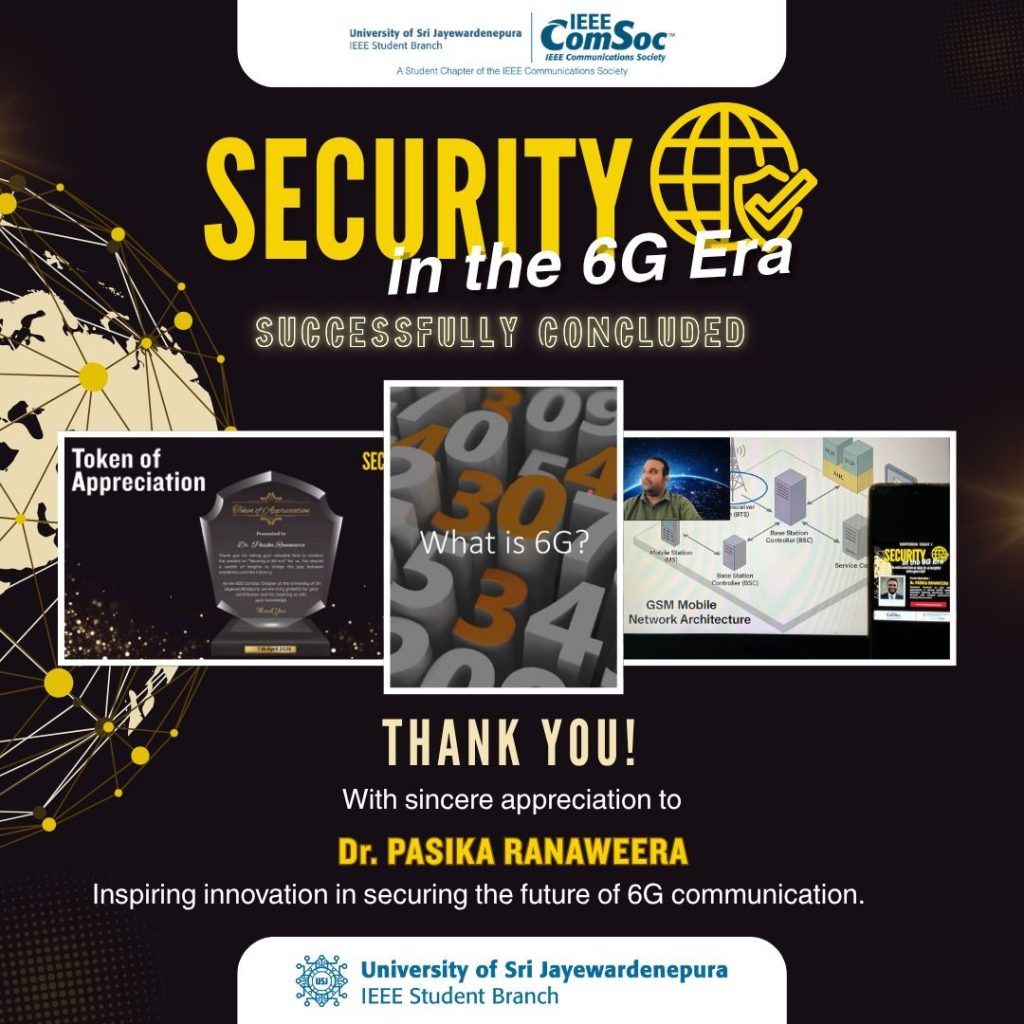
The “Security in the 6G Era” dissemination activity was successfully concluded during the second ENSURE-6G secondment at USJ.
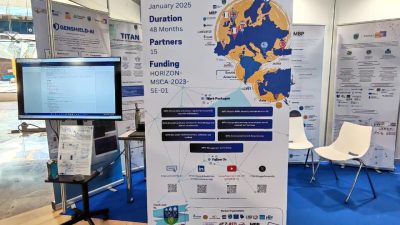
As part of the Horizon Europe ENSURE-6G project, funded under the Marie Skłodowska-Curie Actions Staff Exchanges programme, Dr. Pasika Ranaweera, Assistant Professor at University College Dublin, Ireland, completed his second secondment at the University of Sri Jayewardenepura (USJ), Sri Lanka, from February to April 2026.
This secondment continued the collaborative research activities initiated during his first visit to USJ and further strengthened the partnership between University College Dublin and the University of Sri Jayewardenepura. The exchange supported ENSURE-6G’s broader mission of advancing secure, resilient, privacy-preserving, and sustainable technologies for Beyond 5G and 6G networks.
Advancing Use Case 1: Beyond 5G and 6G for Telemedicine
During the secondment, Dr. Ranaweera continued working on Use Case 1: Beyond 5G for Telemedicine, where USJ plays a leading role within the ENSURE-6G project. The work focused on refining the research direction and strengthening the technical foundation for future healthcare services that can benefit from secure and low-latency next-generation communication networks.
Key research discussions explored how emerging 6G capabilities can support advanced telemedicine applications, including remote patient monitoring, intelligent healthcare analytics, IoT-enabled medical diagnostics, and secure medical data exchange. Particular attention was given to the security, privacy, trust, and reliability challenges that arise when healthcare services are delivered across highly distributed and AI-enabled communication infrastructures.
The secondment also supported continued collaboration with researchers at USJ on how 6G technologies can be responsibly applied to healthcare environments in Sri Lanka and beyond. These discussions contribute directly to ENSURE-6G’s objectives of developing security and privacy mechanisms for critical vertical sectors, where communication failures, cyberattacks, or privacy breaches can have significant societal consequences.
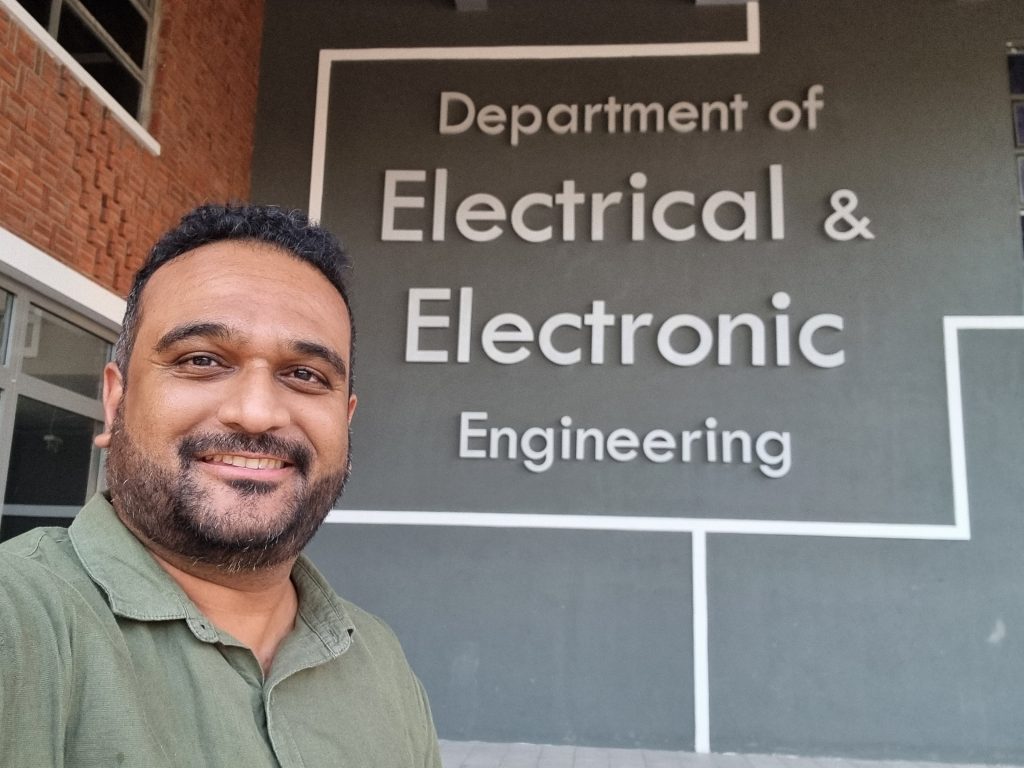
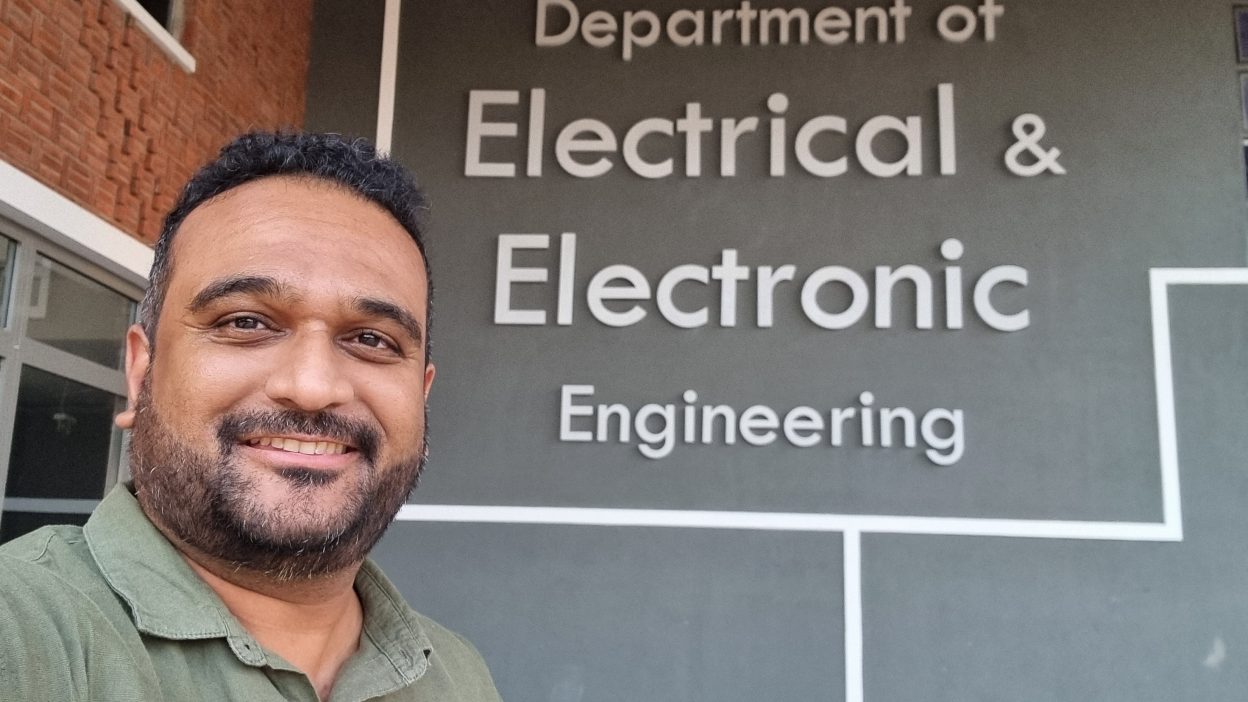
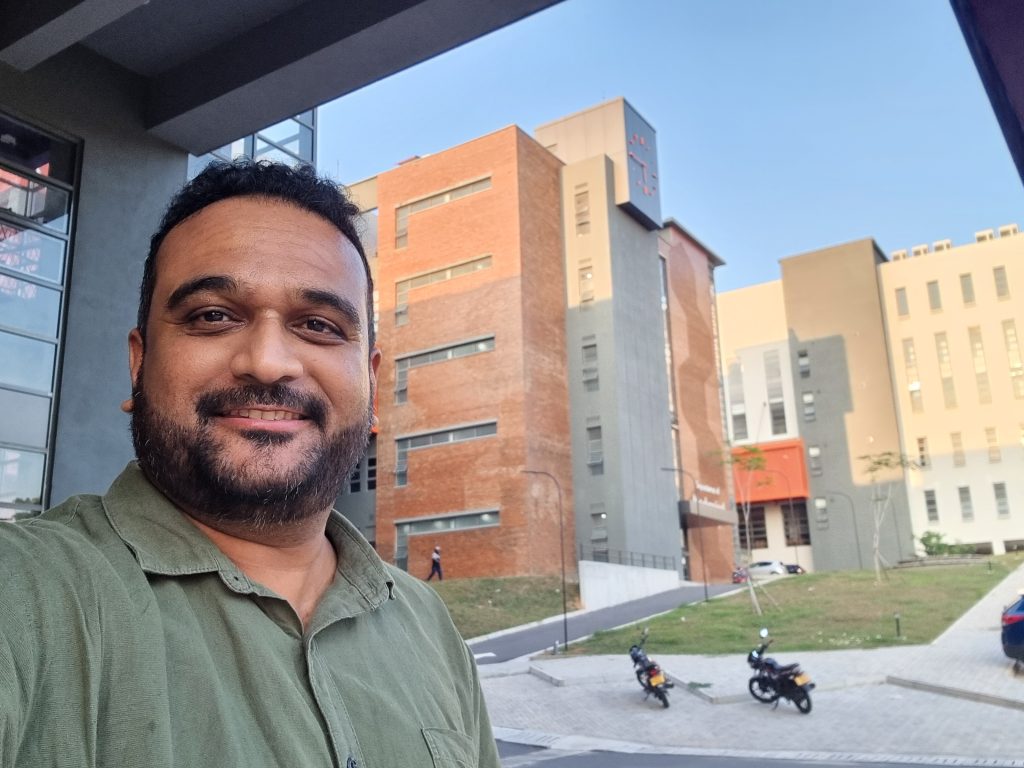
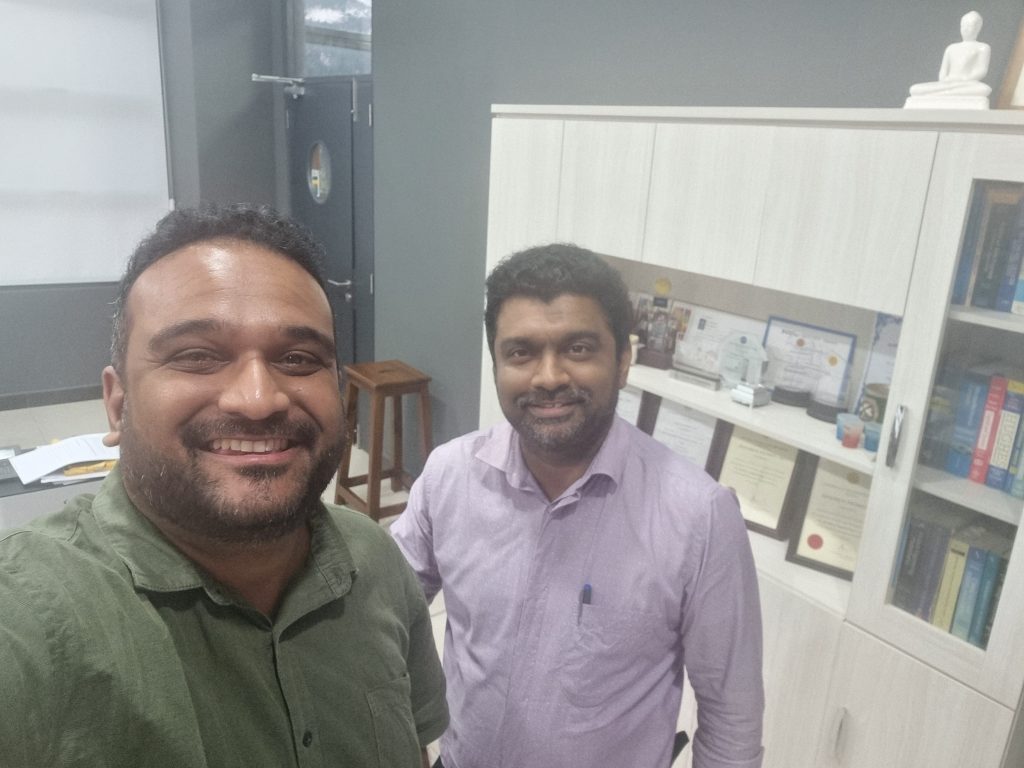
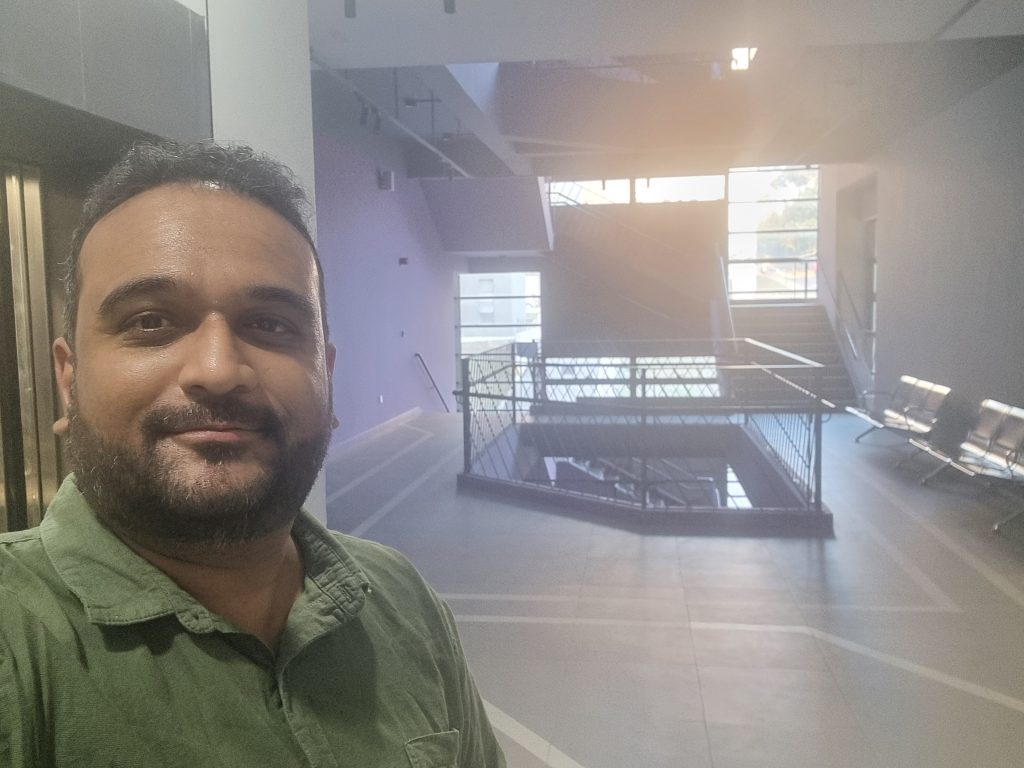
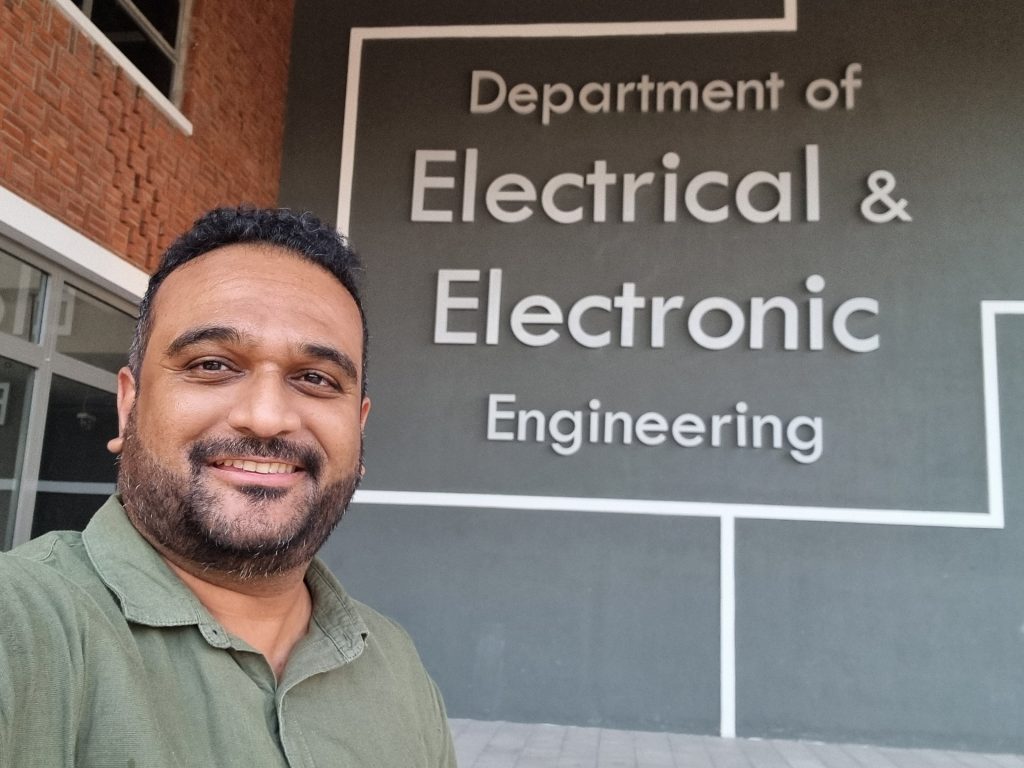
Dr. Pasika Ranaweera at the Department of Electrical and Electronic Engineering, University of Sri Jayewardenepura.
Dissemination Activity: “Security in the 6G Era”
A major dissemination activity during this secondment was the invited guest talk titled “Security in the 6G Era”, delivered on 7 April 2026. The event was jointly organized by the IEEE Communications Society Sri Lanka Chapter and the IEEE ComSoc Student Branch Chapter of the University of Sri Jayewardenepura.
The talk introduced the evolution of mobile networks from 2G to 6G and explained how each generation has changed not only communication performance, but also the security and trust assumptions of the network. Dr. Ranaweera discussed the emerging 6G threat landscape, including Open RAN security, AI-native network risks, cloud-edge continuum security, privacy challenges, autonomous network management, and the need for continuous assurance in future communication systems.
The session attracted strong engagement from undergraduate and postgraduate students, academics, and industry participants. It provided an opportunity to disseminate ENSURE-6G research themes to a wider professional and student community in Sri Lanka and helped raise awareness of the importance of security by design in future 6G systems.
Following the session, Dr. Ranaweera received a formal token of appreciation from the IEEE ComSoc Student Branch Chapter of the University of Sri Jayewardenepura, recognizing his contribution to inspiring innovation in securing the future of 6G communication.
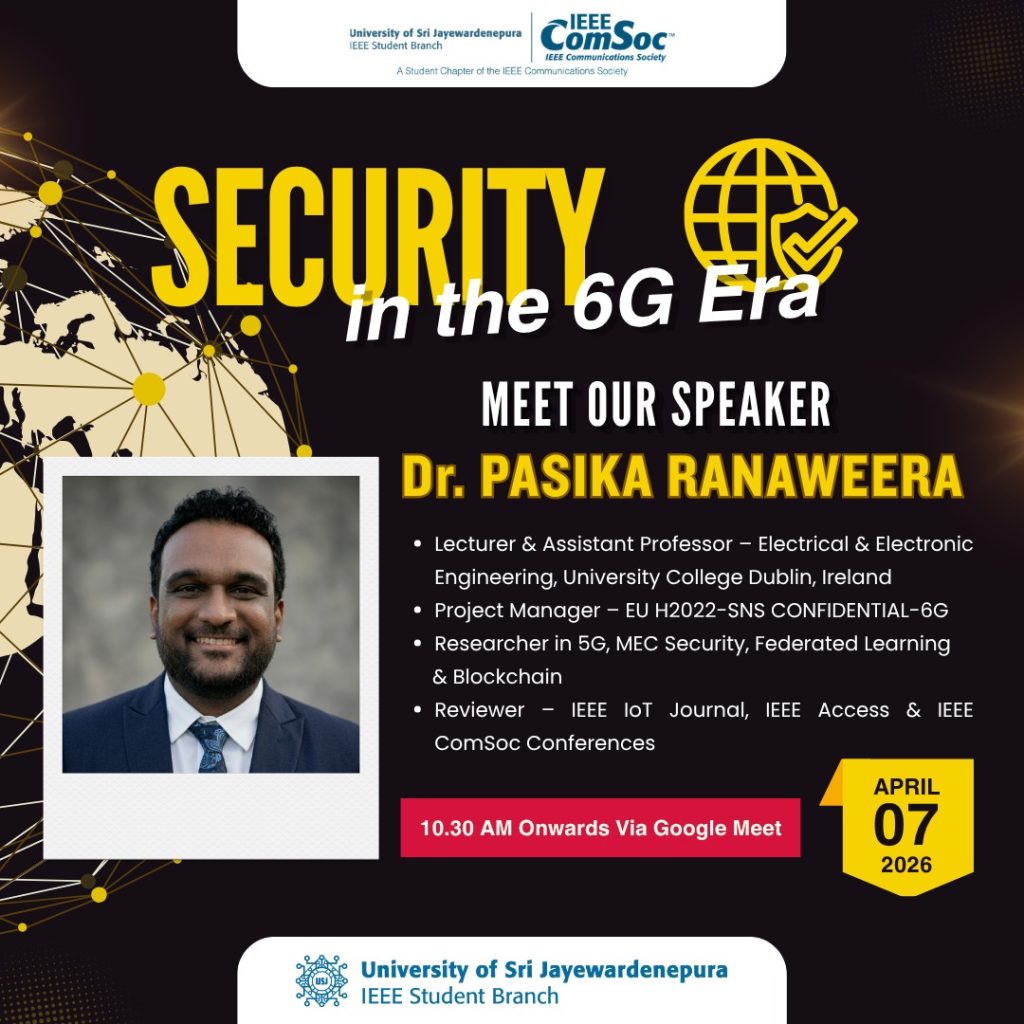
Invited talk announcement for “Security in the 6G Era”.
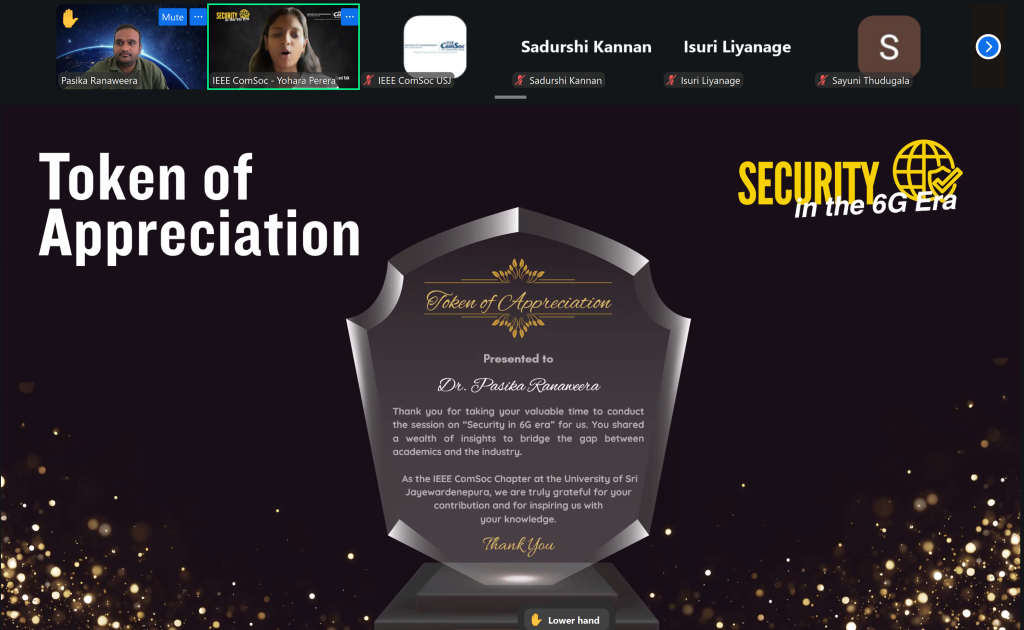
An online session and a token of appreciation were presented after the guest talk.
Collaboration and Knowledge Exchange
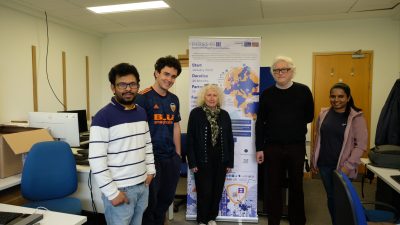
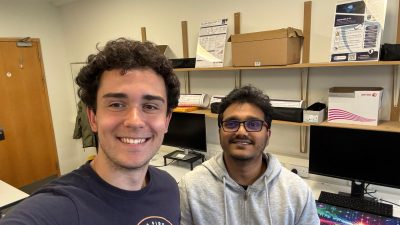
The secondment provided valuable opportunities for in-person collaboration with USJ researchers and academic staff. These engagements helped consolidate the research direction for the telemedicine use case and supported continued knowledge transfer between the European and Sri Lankan partners of ENSURE-6G.
The visit also strengthened institutional links between UCD and USJ by creating further opportunities for joint research, student engagement, and future dissemination activities. Through discussions with local researchers and students, the secondment helped align technical research on 6G security with practical challenges across healthcare, digital infrastructure, and the adoption of emerging technologies in Sri Lanka.
Impact of the Secondment
The secondment contributed to the scientific, societal, and capacity-building objectives of ENSURE-6G. Scientifically, it advanced the telemedicine use case by connecting secure 6G infrastructure research with real healthcare service requirements. It also reinforced the importance of trust, privacy, AI security, and resilience in mission-critical digital health systems.
From a societal perspective, the secondment helped disseminate knowledge on secure 6G technologies to Sri Lankan students, researchers, and professional communities. The “Security in the 6G Era” talk created a platform for discussing how future networks can support critical services while protecting users, data, and infrastructure.
The secondment also supported long-term collaboration between UCD and USJ. By combining UCD’s expertise in 5G/6G security, Open RAN, AI-driven network security, and privacy-preserving mechanisms with USJ’s role in the telemedicine use case, the exchange contributed to a stronger international research network for secure and sustainable 6G innovation.
Conclusion
Dr. Ranaweera’s second secondment at the University of Sri Jayewardenepura further demonstrates the value of ENSURE-6G staff exchanges in building long-lasting international research collaborations. By advancing the telemedicine use case and disseminating knowledge on 6G security to academic and professional communities in Sri Lanka, the secondment contributed to the project’s mission of developing secure, resilient, and trustworthy communication systems for the 6G era.